
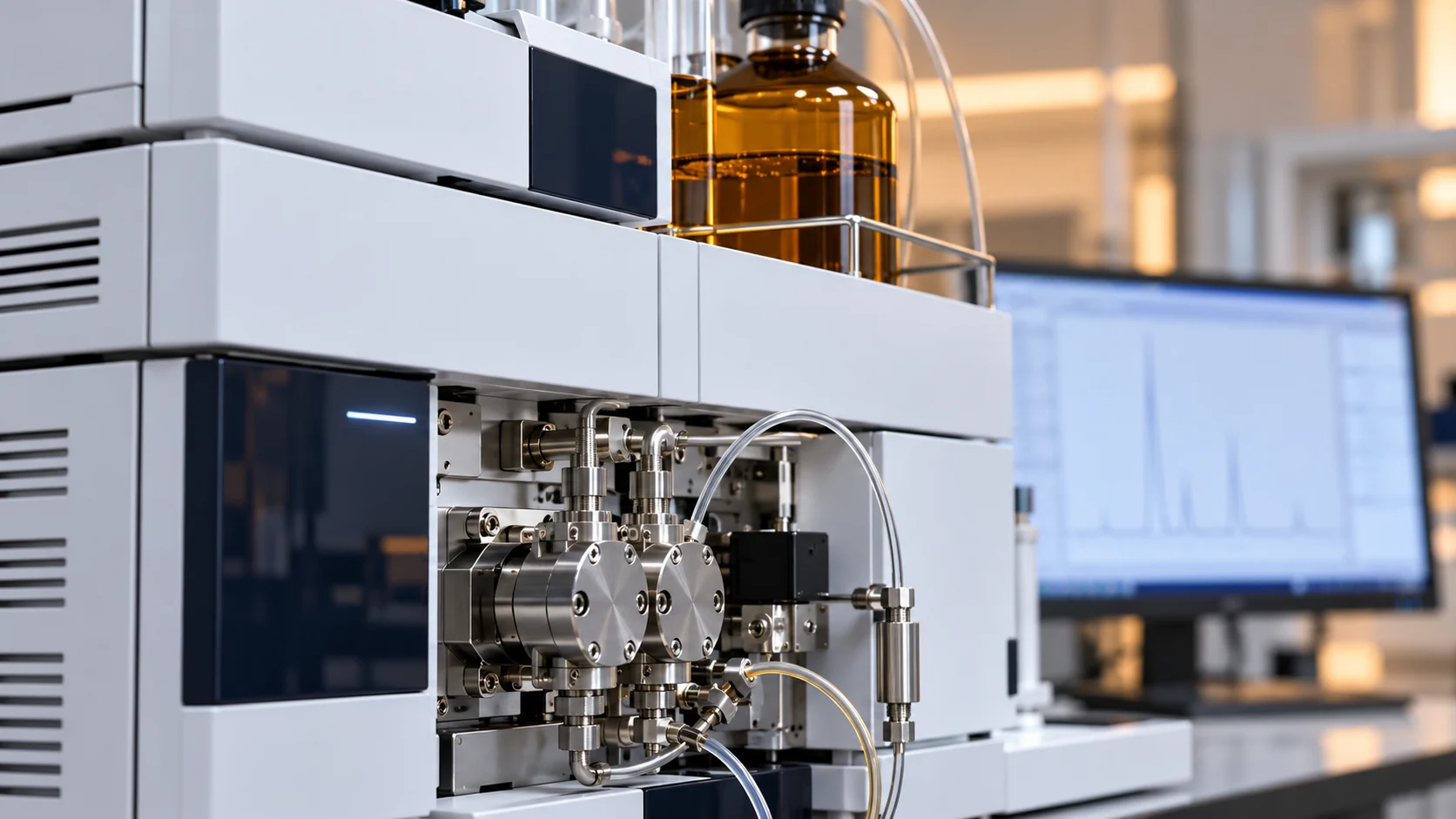
Understand what the reported percentage represents
A chromatographic purity percentage describes a result produced by a particular analytical method and its calculation. It should not automatically be interpreted as the mass fraction of active material in a vial. Detector response, integration rules, method scope and substances that are not measured in the same way can affect how the result should be understood. Ask the laboratory to explain the reported basis.
Identity is a separate question: does the tested material match the intended substance? Assay or content addresses how much of the specified component is present under an appropriate measurement approach. Water, residual solvent and other constituents may require additional tests. For procurement, define these attributes separately and agree which results are needed for acceptance. A supplier’s “98% purity” headline is not enough to establish all of them, and no such universal purity claim is made for unverified CBL-514 material on this website.
Specify the analytical package that supports your decision
Ask for the method reference, sample identity, relevant operating conditions, calculation basis and acceptance criterion. Where appropriate, request the chromatogram and the laboratory’s interpretation of unexpected peaks. If identity is supported by mass spectrometry, check that the reported species and interpretation correspond to the intended material rather than treating the presence of a spectrum as proof by itself.
The level of detail should match the decision you need to make. A screening experiment may have different documentation needs from a tightly controlled comparative study. Record those needs in the project brief before asking for a quotation so that testing costs and deliverables can be compared fairly. Do not extend an analytical result beyond its validated scope, and do not use chromatographic purity as a shortcut for sterility, endotoxin status or suitability for administration. Those questions require separate evidence and appropriate professional oversight.
Frequently asked questions
What does a pure CBL-514 claim establish?
The word pure is insufficient without a material identity, test method, numerical result and acceptance criterion. A formulation and its individual ingredients also require different interpretations of purity and content.
How should a high-purity claim be checked?
Request the actual batch report and method context. Chromatographic area percentage, assay, residual water and impurity limits answer different questions and should not be combined into an unsupported overall quality promise.
Can I assume CBL-514 has 98% purity?
No universal 98% specification has been verified for material offered through this website. A purity value must be tied to the actual batch, analytical method and agreed acceptance criterion.